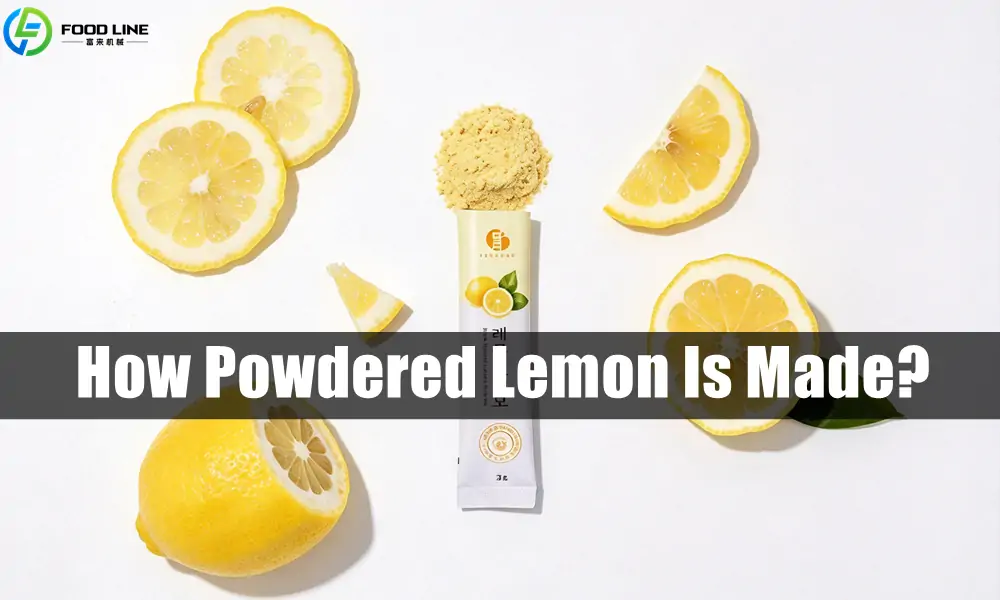
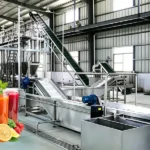
Lemon powder is widely used in instant drinks, bakery products, seasonings, confectionery, and other food applications. But how is powdered lemon made?
There are several ways to produce lemon powder. One common method uses lemon juice, followed by concentration and spray drying. Another method processes the whole lemon through washing, slicing, drying, grinding, and packaging.
Here in this article, we will present the production process of the whole-lemon drying method. It does not require juice extraction or liquid concentration. Instead, fresh lemons are sliced, dried, and ground into a fine powder.
This article focuses on the whole-lemon drying method, which retains both the peel and pulp in the final powder.
The complete lemon powder production process involves five main steps:
Fresh lemon washing
Lemon slicing
Vacuum drying
Grinding and powder processing
Powder packaging
Now, take a look at each step and the equipment used in a commercial lemon powder production line.
1. Lemon Washing: Removing Dirt and Surface Residues
Fresh lemons arrive at the processing plant with dust, soil, and other surface contaminants. First, remove the labels by hand. Then wash the lemons at least 3 times.
Here, we use an industrial fruit washing machine. It typically uses water sprays, rotating brushes, or bubble washing to remove dirt from the lemon surface.
A typical washing process includes:
Initial washing: Water sprays remove loose dirt and dust.
Brush cleaning: Rotating brushes clean the lemon peel more thoroughly.
Final rinsing: Clean water removes remaining surface residues.
Draining: Remove the excess water before the lemons enter the slicing stage.
For whole-lemon powder production, washing is particularly important because the peel remains in the final product.
2. Lemon Slicing: Achieving Uniform Thickness
After washing, transfer the fresh lemons to an industrial fruit slicer.
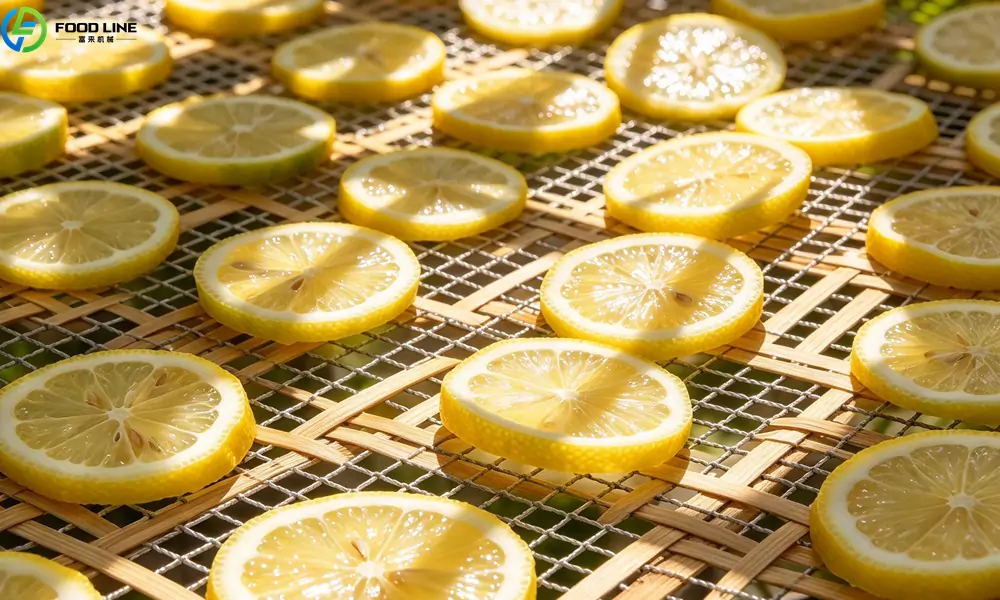
The lemons are cut into uniform slices to ensure consistent drying. Slice thickness is an important factor because it directly affects moisture removal, drying time, and final product quality.
The recommended thickness is 2- 5 mm.
Recommended equipment: Automatic fruit slicing machine with adjustable cutting thickness.
Why is uniform slicing important?
Faster drying: Thin, uniform slices allow moisture to escape more evenly.
Consistent quality: Slices with similar thickness are more likely to reach the target moisture content at the same time.
Better grinding: Properly dried slices become brittle and are easier to grind into powder.
If slices are too thick, the center may retain moisture after drying. If they are too thin, they may break easily during handling.
After slicing, the lemon pieces are evenly spread on drying trays or fed into the next processing stage.
3. Vacuum Drying: The Key to Lemon Powder Quality
Drying is one of the most important stages in the lemon powder manufacturing process. Fresh lemons contain a high percentage of water. This moisture must be removed before grinding to prevent the powder from becoming sticky or clumping during storage.
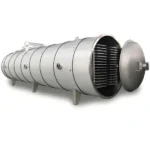
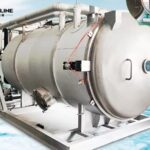
A vacuum drying machine works by reducing the pressure inside the drying chamber. Under reduced pressure, water evaporates at a lower temperature than under normal atmospheric conditions.
This allows lemon slices to dry under relatively mild temperature conditions.
Tray loading: Fresh lemon slices are evenly arranged on drying trays.
Vacuum creation: The chamber is sealed, and a vacuum pump reduces the internal pressure.
Heating and moisture removal: Controlled heat helps moisture evaporate from the lemon slices.
Drying completion: Dry the slices until they reach the required final moisture content.
Recommended Vacuum Drying Conditions
The following values are general starting points for process development, not fixed settings for every machine.
Parameter
Reference Range
Drying temperature
40–60°C
Slice thickness
2–5 mm
Drying time
Several hours or longer
Final moisture content
Typically below 5%, depending on requirements
Actual drying conditions depend on the lemon variety, initial moisture content, loading quantity, equipment design, and target product specifications.
Why Choose Vacuum Drying for Lemon Slices?
Vacuum drying offers several advantages for processing heat-sensitive fruits.
Lower-temperature processing: Helps reduce heat damage to natural color, flavor, and sensitive nutrients.
Reduced oxygen exposure: Helps limit oxidation and color changes.
Flavor retention: Can help preserve more of the lemon’s natural aroma compared with some conventional high-temperature drying methods.
Suitable for whole-fruit processing: Both the peel and pulp can be dried together.
After drying, the lemon slices should be sufficiently crisp and dry for the grinding process.
Check the moisture content before unloading. Excess moisture can cause powder clumping, while unnecessarily severe drying can increase energy consumption and grinding losses.
Recommended equipment: Industrial vacuum drying machine with temperature and vacuum control.
4. Lemon Grinding: Turning Dried Slices into Fine Powder
In this step, put the sliced lemons into a grinding machine. Dried lemon slices are relatively brittle, making them suitable for mechanical size reduction.
Depending on the required powder fineness and production capacity, manufacturers can choose a universal pulverizer, hammer mill, or ultrafine grinding machine.
How Fine Should Lemon Powder Be?
The required particle size depends on the final application.
Coarse powder: Suitable for some bakery products, seasoning blends, and food ingredients.
Fine powder: Suitable for beverage mixes, instant drink formulations, and general food processing.
Ultrafine powder: Used when a finer texture and more uniform particle distribution are required.
80–100 mesh is a good choice.
Recommended equipment: Industrial pulverizer or ultrafine grinding machine with a suitable particle-size control system.
5. Lemon Powder Packaging: Protecting Freshness and Quality
Packaging is the final stage of lemon powder production. Lemon powder is sensitive to moisture and oxygen. Once exposed to humid air, it may absorb water, form lumps, and lose its free-flowing properties. Therefore, the packaging process should minimize exposure to the surrounding environment.
If you need an accurate quotation, tell us the required capacity, final powder specifications, and packaging format. We will offer you a suitable quote.
Yes. Lemon peel contains natural aromatic compounds and fiber, making it a valuable component of the final powder.
Is Lemon Powder Water-Soluble?
Whole-lemon powder is not necessarily completely water-soluble because it contains peel particles, fiber, and other insoluble solids.
Its dispersibility and sedimentation depend on particle size and processing conditions.
If you want to produce a fully soluble lemon beverage powder, you better to use a juice extraction and spray-drying machine.
Invest in an Efficient Lemon Powder Production Line
Looking to start or expand a powdered lemon manufacturing business? Henan Foodline Machinery provides customized fruit and vegetable processing equipment, including washing machines, slicing machines, vacuum dryers, grinding machines, and powder packaging systems.