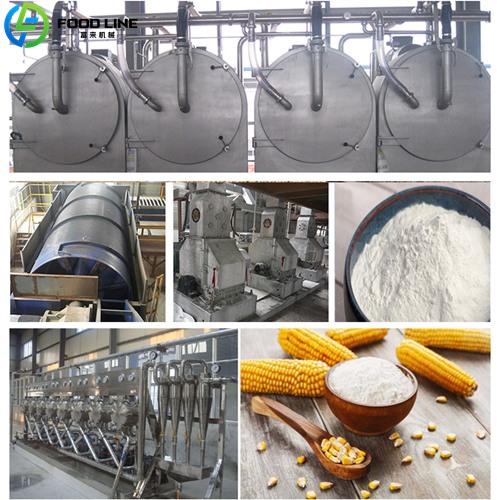
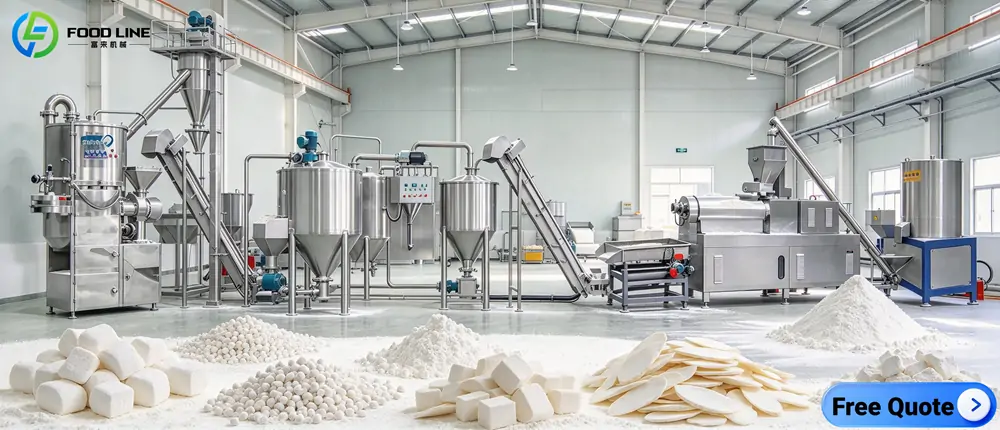
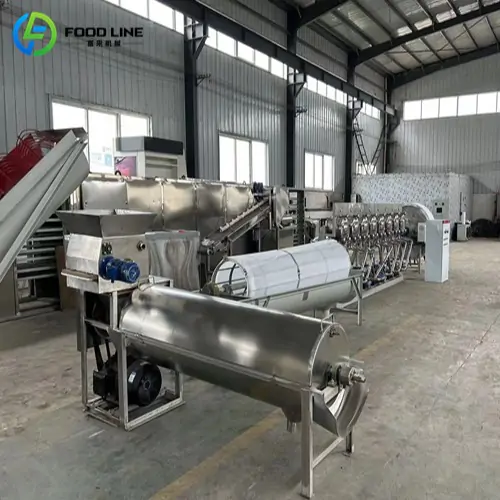
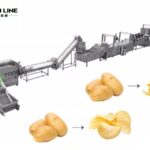
A complete starch production line processes cassava, potatoes, sweet potatoes, and other starch-rich roots. It integrates feeding, washing, crushing, fiber separation, starch purification, dewatering, and drying into one connected system.
Foodline can configure the equipment according to your raw material, processing capacity, starch quality requirements, and factory conditions.
Starch Production Line Overview
A starch processing line separates starch from plant materials through mechanical crushing, washing, screening and purification. The starch slurry is then dewatered and dried into powder.
Multiple Raw Materials
Designed for cassava, sweet potato, potato, lotus root and other suitable starch-rich roots.
Connected Processing
Links the main processing stages to reduce repeated manual handling and improve workflow.
Customized Configuration
Equipment selection depends on raw material characteristics, capacity, target quality and site conditions.
Starch Production Process Flow Chart
The following is a typical process for root-crop starch extraction. The final sequence may vary according to your raw material and project design.
Raw Material Feeding
Fresh cassava, potatoes, or sweet potatoes
Washing and Cleaning
Rotary drum washer, paddle washer, and rinsing
Crushing and Pulping
Break down roots to release starch granules
Fiber Separation
Separate coarse pulp and fiber from starch slurry
Screening and Extraction
Screen starch slurry and remove residual particles
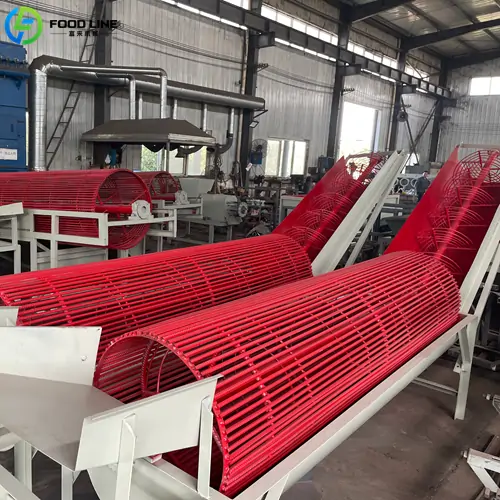
The washing section removes soil, sand and surface impurities before crushing. A typical system combines:
Raw material receiving hopper
Quantitative feeding conveyor
Rotary drum washer and paddle washer
Elevator or screw conveyor
Purpose: Improve cleaning performance and reduce the transfer of impurities into downstream processing.
2. Crushing and Pulping System
Washed roots are crushed or rasped to release starch granules from plant tissue. Crushing fineness must match the raw material and separation equipment.
Root crusher or rasping machine
Grinding equipment, where required
Slurry transfer pump and conveyors
Key consideration: Crushing that is too coarse may leave starch trapped in the fiber, while excessive fine particles can increase the load on screening.
3. Fiber Separation and Starch Extraction
Multi-stage screens separate starch-rich liquid from coarse pulp and fiber. Secondary screening and fine filtration help remove remaining suspended particles.
Cylindrical fiber separation screens
Starch slurry screening machines
Fine filtration equipment
Collection tanks and slurry pumps
Screen mesh, water flow, slurry concentration and crushing fineness all influence starch recovery.
4. Desanding and Starch Purification System
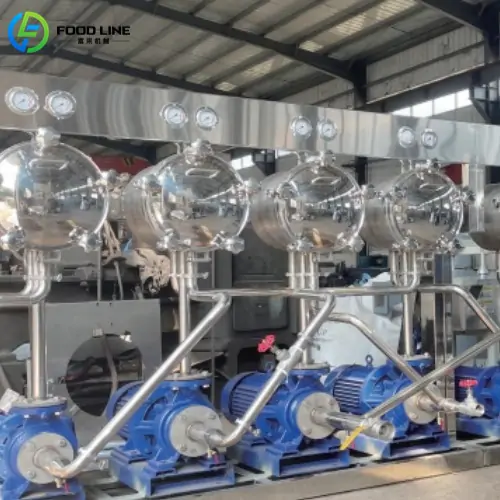
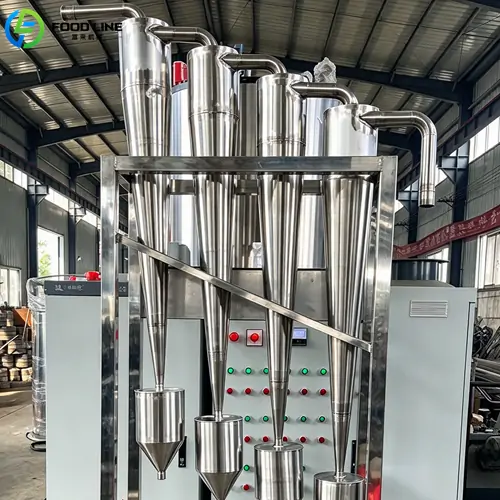
The starch slurry passes through desanding and purification equipment to remove residual sand, fiber particles and other impurities. Hydrocyclone systems can provide multi-stage washing and separation.
Starch desander
Hydrocyclone washing system
Starch slurry tank
Pumps and process piping
The number of purification stages should be selected according to raw material quality and the required starch purity.
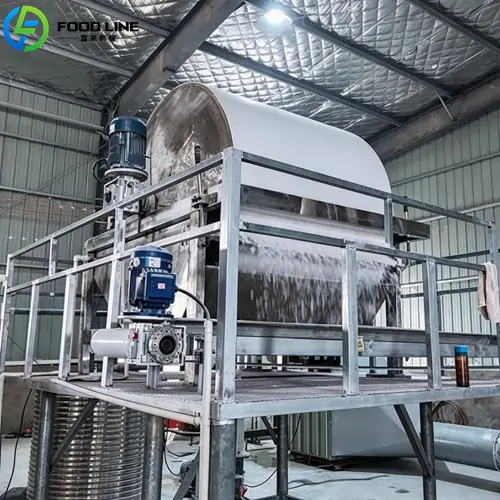
After purification, the starch slurry enters the dewatering section. A vacuum filter removes water and forms a wet starch layer for transfer to the dryer.
Remove excess water from starch slurry
Form a relatively uniform wet starch layer
Reduce the moisture load on the drying system
Performance depends on slurry concentration, vacuum conditions and the selected equipment.ed starch purity.
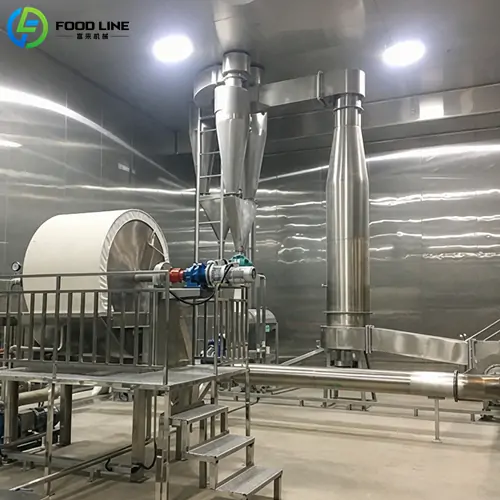
6. Pneumatic Starch Drying System
A pneumatic or flash dryer uses hot air to dry wet starch particles during transport. A cyclone separator and dust collection system then recover the dried product.
Confirm the final moisture target against the product specification and applicable standards.
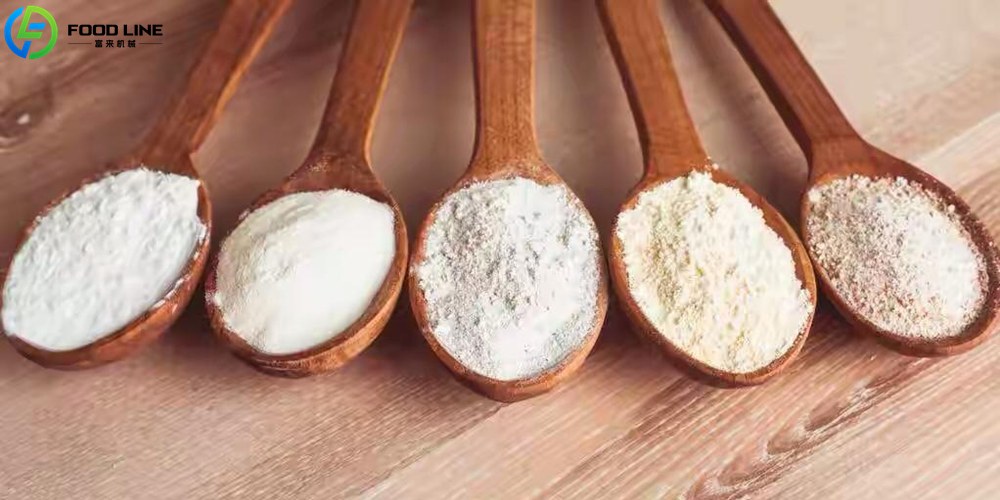
Types of Starch: Guide to Corn, Cassava, Potato, Wheat, and Rice Starches
Indicative Starch Content or Yield by Raw Material
The following ranges are taken from the supplied reference and should be treated as indicative raw-material yield figures, not guaranteed finished-product recovery.
Planning to process cassava, sweet potatoes, potatoes or other roots? Share your production targets so our team can assess the required equipment, processing stages, utilities and factory layout.