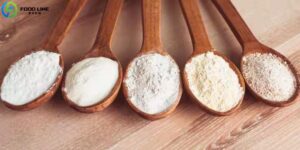
Tapioca starch is a natural starch made from cassava roots. It is widely used in food processing, paper production, textiles, pharmaceuticals, and other industries.
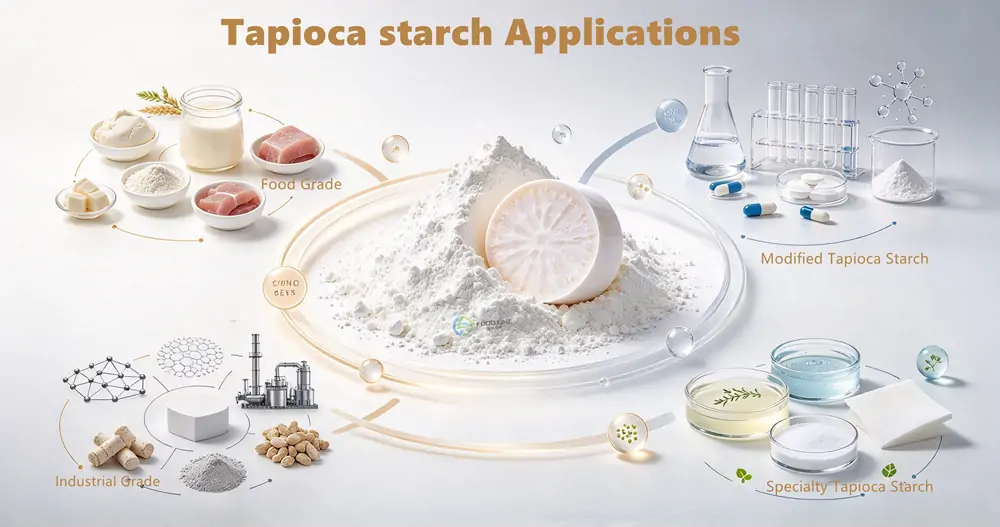
Different applications require different starch properties. Depending on the processing method and intended use, tapioca starch can be divided into several types, including food-grade tapioca starch, industrial-grade tapioca starch, modified tapioca starch, and specialty tapioca starch.
In this guide, we will explain the main types of tapioca starch, their key features, and their common applications.
4 Major Types and Key Industrial Applications of Cassava Starch
1. Food-Grade Tapioca Starch
Food manufacturers use food-grade cassava starch to improve the texture, thickness, and consistency of their products.
When manufacturers heat dried yuca with water, it forms a thick paste. This property makes it useful in many food applications.
Common applications:
Bakery products: Improves texture and helps keep products soft.
Noodles and vermicelli: Provides a chewy texture and supports product structure.
Sauces and soups: Thickens liquids and creates a smooth consistency.
Snacks and desserts: Helps produce a crispy or chewy texture, depending on the recipe.
Bubble tea pearls: Provides the chewy texture of tapioca pearls.
Gluten-free foods: Helps improve texture and structure in gluten-free recipes.
Food manufacturers often choose tapioca flour when they need a clean taste and a smooth, consistent texture.
2. Industrial-Grade Tapioca Starch
Industrial manufacturers use manioc starch in paper production, textiles, adhesives, and other non-food applications.
Its properties make it useful in several industrial processes.
Common applications:
Paper production: Improves paper strength and surface quality.
Corrugated cardboard: Works as an adhesive to bond paper layers.
Textile manufacturing: Helps strengthen yarn during weaving and improves fabric finishing.
Adhesives: Serves as a raw material for starch-based glues.
Construction materials: Can be used in selected formulations, depending on the required performance.
Industrial buyers usually select tapioca starch based on viscosity, bonding performance, moisture content, and compatibility with their production processes.
3. Modified Tapioca Starch
Modified tapioca starch is tapioca starch that has been treated through physical, chemical, or enzymatic processes to improve specific properties.
The purpose of modification is to make the starch perform better under certain processing conditions. For example, some modified starches offer better stability during heating, cooling, freezing, or mechanical mixing.
Common applications:
Processed foods: Helps maintain texture and consistency.
Frozen foods: Some types help reduce texture changes during freezing and thawing.
Instant foods: Supports quick thickening and convenient preparation.
Sauces and dressings: Helps control viscosity and product stability.
Paper and textile industries: Provides specific bonding, coating, or finishing properties.
Different modification methods produce different results. Buyers should choose a type based on the product formula, processing temperature, acidity, and other operating conditions.
4. Specialty Tapioca Starch
Specialty tapioca starch is developed for specific applications that require particular functional properties. Depending on the manufacturer and processing method, it may include starch products designed for specialized food, pharmaceutical, environmental, or other industrial uses.
Common applications:
Pharmaceuticals: Certain starch products serve as tablet binders or disintegrants when they meet the required standards.
Biodegradable materials: Manufacturers combine selected starches with other materials to produce starch-based biodegradable products.
Environmental applications: Some starch-based products support specific water-treatment and environmental processes.
Specialty foods: Food manufacturers use tailored starches to achieve particular textures or improve processing performance.
Not all specialty starches are suitable for every application. Buyers should check the technical specifications and relevant quality or regulatory requirements before selecting a product.
Native vs. Modified Tapioca Starch
Native and modified tapioca starch are two important categories to understand when choosing a product.
Feature
Native Tapioca Starch
Modified Tapioca Starch
Processing
Extracted and dried without intentional modification of its starch structure
Further treated to improve selected properties
Main advantage
Natural starch functionality and broad uses
Performance tailored to specific applications
Common uses
Food, paper, adhesives, and textiles
Processed foods, frozen products, specialty adhesives, and other technical applications
Selection basis
Basic thickening, binding, or other functional needs
Specific requirements for stability, texture, or processing conditions
The best choice depends on the application. Native starch may be sufficient for standard production needs, while modified starch may be more suitable when a process requires enhanced performance.
How to Choose the Right Type of Tapioca Starch
Before purchasing tapioca starch, consider the following factors:
1. Application
Determine whether the starch will be used in food, paper, textiles, adhesives, pharmaceuticals, or another industry.
2. Required performance
Consider the required viscosity, thickening ability, bonding strength, texture, and stability.
3. Processing conditions
Check the operating temperature, pH, mixing method, and whether the product will undergo freezing or heating.
4. Quality standards
For food and pharmaceutical applications, confirm the relevant purity, safety, and regulatory requirements. Industrial applications may have different technical specifications.
5. Supplier capabilities
Choose a supplier that can provide consistent quality, technical data, and the appropriate product specifications for your production needs.
Conclusion
Tapioca starch serves many purposes across the food and manufacturing industries.
Food-grade tapioca starch improves food texture and consistency. Industrial-grade tapioca starch supports paper production, textiles, and adhesives. Modified and specialty tapioca starches offer additional functions for applications with more specific requirements.
Before choosing a product, identify your application, review your processing conditions, and compare the relevant technical specifications. This approach helps you select the right tapioca starch for your production needs.