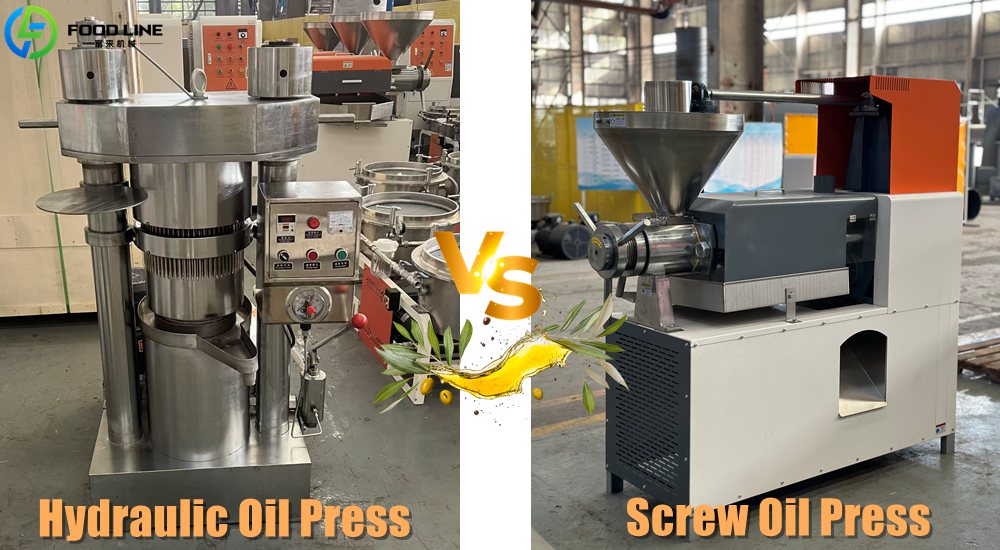
When it comes to oil processing equipment, hydraulic oil press machines and screw oil presses are two mainstream options. Many people preparing to enter the oil pressing industry ask: Which one is better?
The answer is: There’s no absolute better or worse; it depends on your needs. This article will provide a detailed comparison from multiple perspectives to help you make an informed choice.
Hydraulic oil presses use a high-pressure hydraulic system to generate static pressure, squeezing the oil out of the oilseeds like “pressing” something. This method is relatively gentle and generates very little heat.
Screw press oil expellers, on the other hand, rely on an electric motor to drive a screw shaft to rotate, using the propulsive force of the screw threads to dynamically press the oilseeds through “squeezing + friction,” operating in a continuous mode.
Simply put: one presses slowly, the other squeezes forcefully.
II. Comprehensive Comparison
Feature
Hydraulic Oil Press
Screw Oil Press
Oil Yield
Higher (especially for high-oil seeds), extraction rate up to 95%+
Medium to high (85-92%), about 6-8% oil remains in the cake
⭐⭐⭐ Heat from friction (60-120°C / 140-250°F) may affect some nutrients
Production Efficiency
Batch processing, works in cycles — suitable for small batches
Continuous processing, can run 24/7 — suitable for large batches
Equipment Cost
Medium to high (bigger upfront investment)
Medium to low (good value for money)
Operating Cost
Low energy use, less wear and tear
Higher energy use, screw parts need regular replacement
Ease of Use
Simple, highly automated, one person can run multiple machines
Simple but requires steady feeding and temperature control
Suitable Oilseeds
Sesame, peanut, walnut, olive, almond — high-oil seeds, good for cold pressing
Soybean, canola/rapeseed, cottonseed, peanut — good versatility
Floor Space
Small (100–200 sq ft / 10–20 sq m)
Small (100–200 sq ft / 10–20 sq m)
III. How to Choose? Based on Your Specific Needs
✅ Choose a hydraulic oil press if you:
You want high-quality oil — Targeting the premium market with “cold-pressed” products. Appearance and nutrition come first. Hydraulic presses produce clear, bright oil that commands a higher price.
You process high-value oilseeds — Walnuts, sesame, olives, almonds, etc. These seeds are expensive, so you need maximum oil extraction. Hydraulic presses achieve higher yields with these materials.
You run a small-scale operation or a storefront — Offer on-site pressing so customers can watch the oil come out in 5–7 minutes. This “see-it-yourself” transparency is a great selling point for farmers’ markets and neighborhood shops.
✅ Choose a screw oil press if you:
You prioritize output and efficiency — If you plan to process 5+ tons per day and need continuous operation, the screw press is the way to go.
You process soybeans, canola, or similar oilseeds — These have lower oil content. The screw press’s continuous method is more efficient and cost-effective overall.
You have a limited budget and want quick payback — Screw presses have lower upfront costs. Plus, for seeds like peanuts, they can achieve 2–3% higher yield than hydraulic presses, helping you recover your investment faster.
IV. Purchase Recommendations
Business Model
Recommended Machine
Reason
“Press-to-order” storefront, small workshop
Hydraulic Oil Press
Fast batch time (5–7 min/cycle), excellent oil quality, great for in-store demonstration
Small to medium mill (5–15 tons/day)
Screw Oil Press
Continuous operation, high efficiency, fast return on investment
Premium oil production (walnut oil, sesame oil)
Hydraulic Oil Press
Cold-press process preserves nutrients and flavor, superior product quality
Back to the original question: Hydraulic oil press or screw oil press — which is better?
For oil quality, the hydraulic press wins. Cold pressing produces pure, clean oil with all nutrients intact. Perfect for the premium market.
For production efficiency, the screw press wins. Continuous operation, high output, fast payback — ideal for volume-focused businesses.
If you want a small but premium oil mill focused on quality and customer trust, the hydraulic press is your better choice. If you run a larger-scale processing business focused on volume and efficiency, the screw press will help you make more money.
The best approach is to consider your raw materials, target market, and budget before deciding. If your budget allows, owning both is ideal — use the hydraulic press for premium cold-pressed oils and the screw press for regular hot-pressed oils. Cover both markets and maximize your profits!
Edith is a seasoned food machinery industry professional with over 10 years of hands-on experience in food processing equipment research, factory website operation, and technical content creation.