Water Spray Retort Autoclave for Food Sterilization
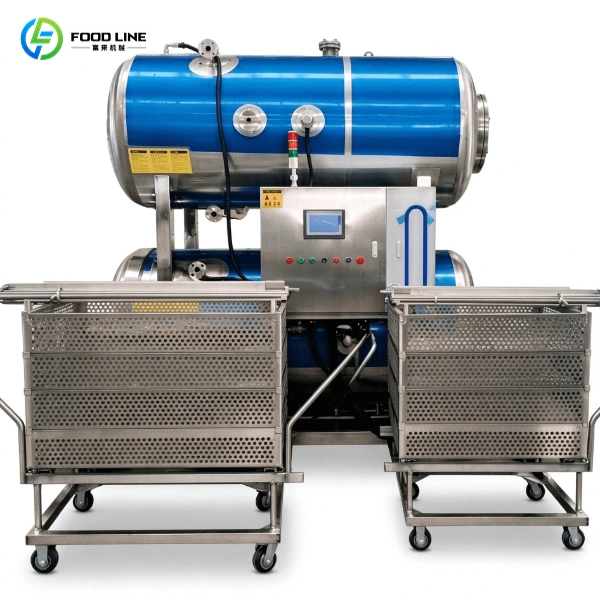
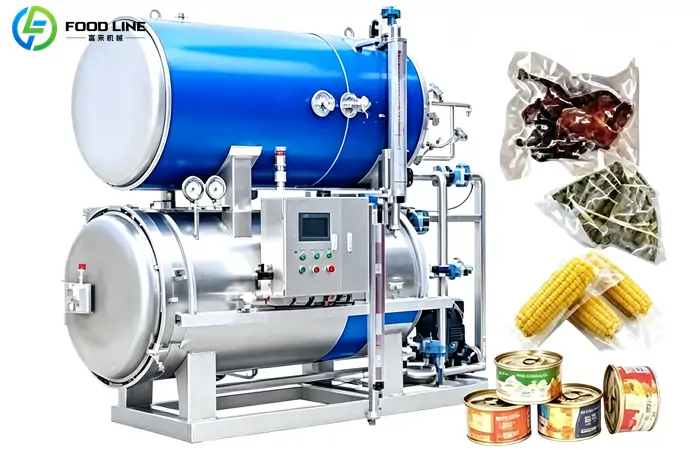
The water spray retort autoclave uses electric heating and hot water circulation to sterilize packaged food. It heats food evenly and controls temperature and pressure during the sterilization process.
Siemens PLC and touchscreen HMI for automatic operation
Industrial Retort Sterilizer for Your Food Products
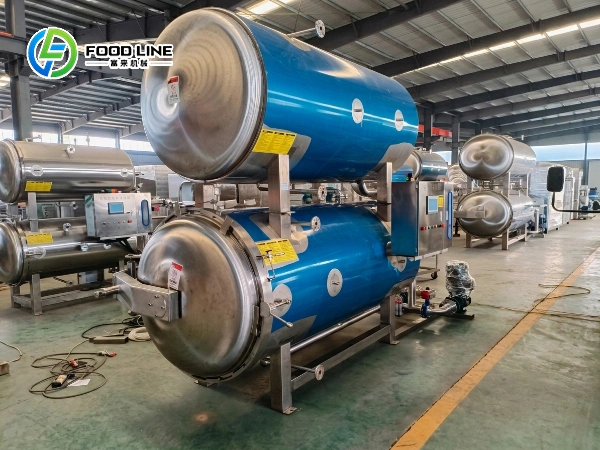
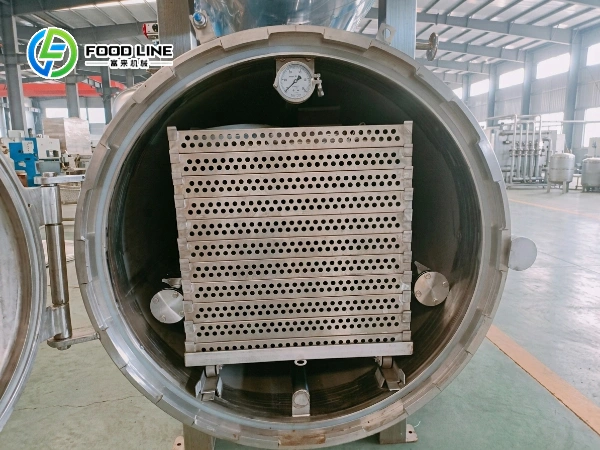
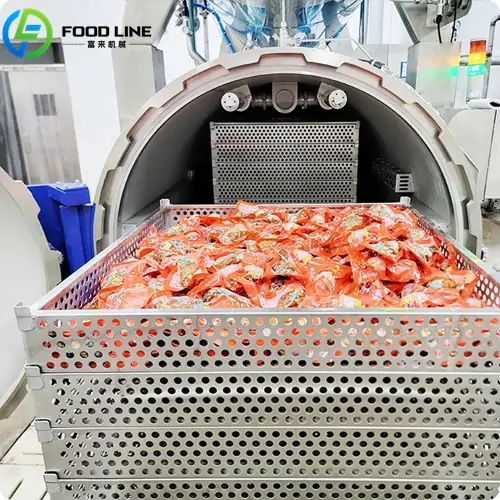
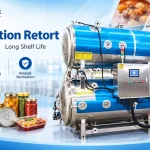
The food retort sterilizer has a built-in 60 kW electric heating system, so it does not need a separate steam boiler. Its double-tank design supports hot water storage and circulation. The Siemens PLC touchscreen lets operators set and monitor the sterilization process. This water spray retort autoclave works with suitable heat-resistant food packages, including retort pouches and stand-up pouches. It can process cooked meat, beef bone broth, soups, ready meals, and other packaged foods.
Based on the heating medium and equipment design, high-temperature retort sterilizers can be divided into the following types:
1. Steam Retort
A steam retort uses saturated steam as the heating medium. It has a simple structure, relatively low equipment cost, and fast heating speed. However, steam may cause uneven temperature distribution inside the chamber. Condensate can also collect in certain areas, creating cold spots. Proper product loading and arrangement are therefore essential. The strong steam impact may also increase the risk of glass bottle breakage.
Steam retorts are more suitable for large-scale production lines with experienced process teams.
2. Water Immersion Retort
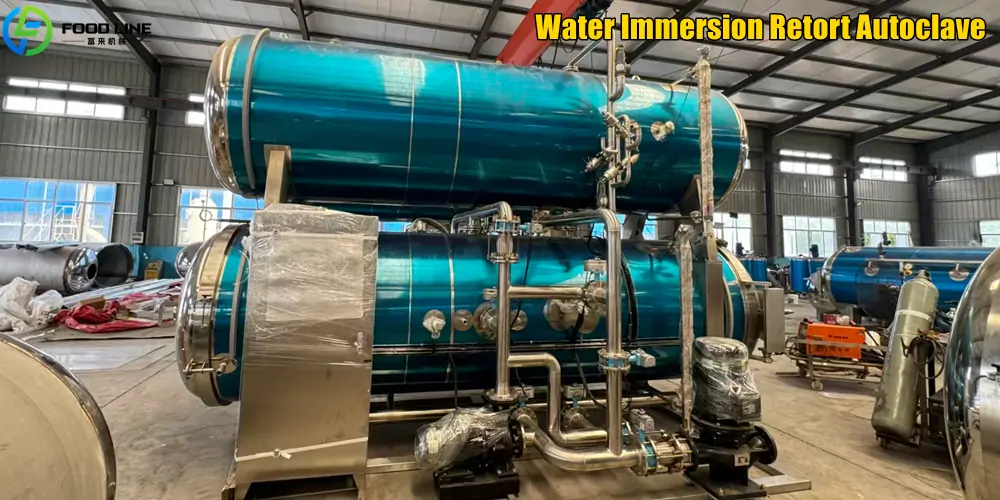
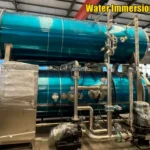
A water immersion retort completely submerges products in hot water during sterilization. This provides uniform heat distribution, with temperature differences typically controlled to around 0.5°C.It offers stable counter-pressure control during cooling and is suitable for tinplate cans and glass jars. It also helps reduce bottle breakage and can deformation. Its main disadvantages are a slightly slower heating process and higher water consumption.
It is a popular choice for small and medium-sized canned food and ready-to-eat food manufacturers.
A water spray retort distributes hot water through multiple spray nozzles from different directions. This provides efficient heat transfer while reducing water consumption. It offers a good balance between temperature uniformity and processing efficiency. The equipment generally costs more than a water immersion retort. Some advanced models use customized heat exchangers and multi-layer fine-mist spray systems to achieve temperature differences as low as ±0.2°C.
It is suitable for flexible pouches, irregularly shaped packages, and glass jars.
4. Rotary Retort
A rotary retort rotates or tumbles products at a controlled speed during sterilization. This movement improves heat transfer and can shorten processing time.
It is particularly suitable for high-viscosity products, such as eight-treasure porridge, helping prevent ingredient separation during heating. It can also process flexible pouch packaging.
5. Water-Steam-Air Retort
This type of retort uses a mixture of water, steam, and compressed air as the heating medium.
It combines some of the advantages of water immersion and water spray sterilization. The system also provides precise pressure control, making it suitable for products that require stable temperature and pressure conditions.
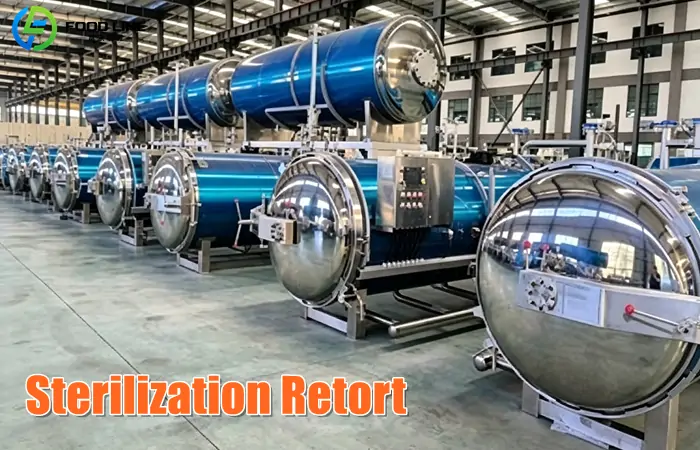
Industrial retort sterilizer
Other Retort Sterilizer Configurations
In addition to heating methods, retort sterilizers can also be classified by their structure:
Vertical and horizontal retorts: Classified by chamber orientation.
Single-vessel and double-vessel retorts: Classified by the number and arrangement of vessels.
Double-layer (upper and lower tank) retorts: The upper tank stores and preheats water, while the lower tank performs sterilization.
Parallel double-retort systems: Two sterilization vessels operate in parallel to improve production efficiency.
How Does a Double-Vessel Water Immersion Retort Save Energy?
In a double-vessel water immersion retort, the upper tank stores hot water and reuses residual heat from the previous sterilization cycle. This reduces the amount of steam required to heat water for the next batch, helping shorten heating time and lower energy consumption.
Water Spray Retort Autoclave Price
Henan Foodline Machinery provides customized food sterilization solutions for different products, packaging formats, and production capacities. If you are looking for an Industrial Retort Sterilizer for ready-to-eat meat, canned food, sauces, vegetables, or packaged meals, leave your message below. Our product manager will send a suitable retort sterilizer configuration.