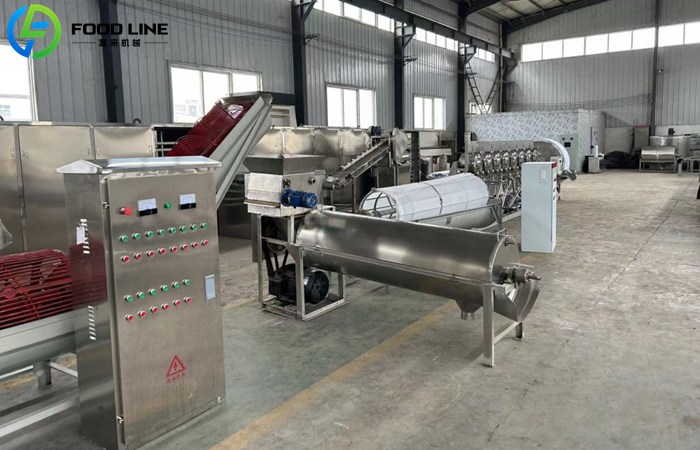
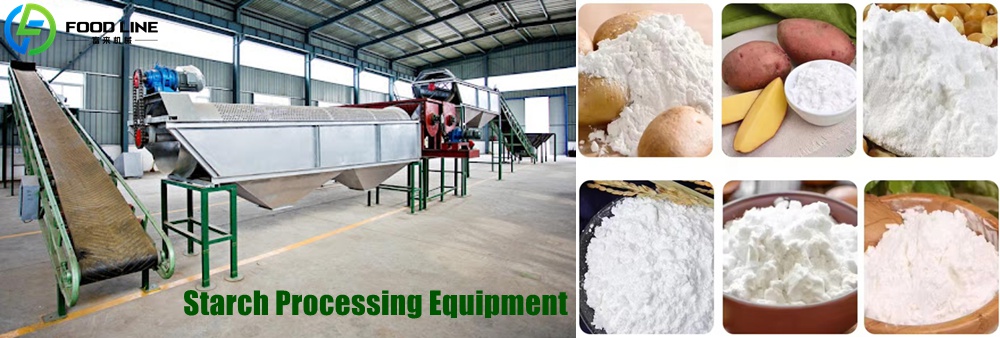
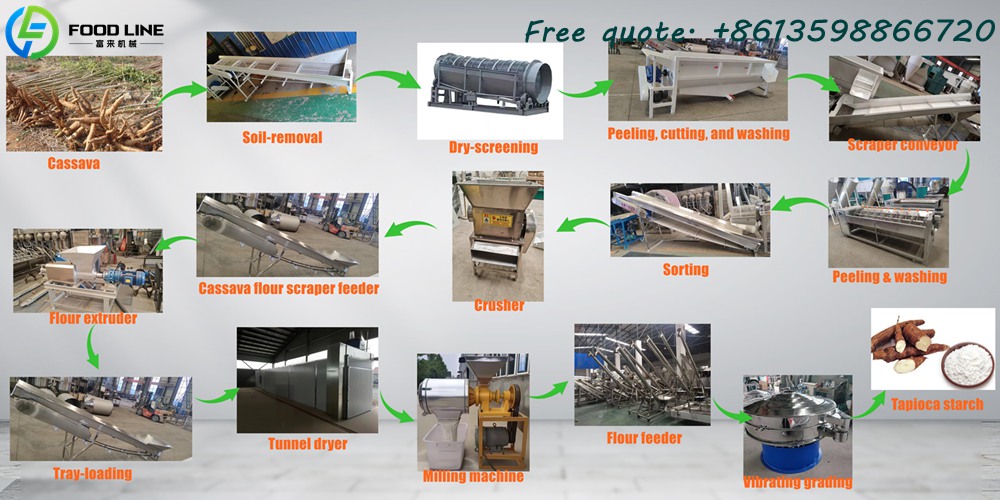
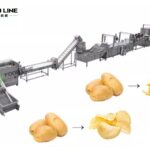
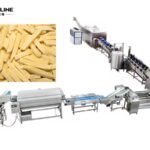
The 1-50+ tons/day cassava starch production line is a complete industrial solution designed to convert fresh cassava roots into high-quality starch efficiently. Our cassava starch processing machine integrates washing, crushing, grinding, starch separation, protein removal, dewatering, and drying, ensuring consistent quality, high yield, and low operational costs.
Price: 80000+ USD.
Contact Foodline for the Best Price
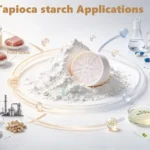
This fully automated process is ideal for food, pharmaceutical, paper, textile, and industrial applications.
10-50 ton per day Cassava Starch Production Process
1. Selecting Raw Materials
High-quality cassava is essential. Cassava younger than 10 months has low starch content, while older cassava (>24 months) is fibrous and harder to process. Proper selection ensures maximum starch yield.
2. Washing and Conveying
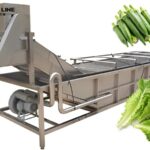
Cassava is washed to remove dirt, sand, and peel. Uniform feeding and proper water pressure ensure effective cleaning and smooth material flow to the next step.
3. Crushing
Cassava roots are crushed into small pieces (~1 cm) to improve grinding efficiency and starch release. This step prevents overloading the grinder and increases starch yield.
4. Grinding
Grinding occurs in two stages:
First grind: releases coarse starch without damaging starch granules.
Second grind: re-grinds residues with water to improve starch yield by 3–5%.
Contact Foodline for the Best Price
5. Slurry and Residue Separation
Pressure rotary sieves separate starch from fibers. Residues can be dried for animal feed or used directly as wet feed. Proper pressure and water flow ensure high starch extraction.
6. Desanding
Centrifugal desanders remove sand and heavy particles. Two cycles remove nearly all sand, improving starch purity.
7. Rotary Filtering
Removes small debris before starch enters disc separators, protecting sensitive equipment.
8. Disc Separation (Protein Removal)
Disc separators remove up to 80% of protein in the first stage and reduce it to <0.5% in the second stage. This enhances starch whiteness and quality.
9. Cyclone Washing and Refining
Cyclone units remove residual proteins and minerals through countercurrent washing, ensuring pure, high-quality starch.
10. Dewatering
Vacuum drum filters remove excess water, producing wet starch with ~39% moisture—ideal for efficient drying.
11. Drying
Airflow collision dryers use hot air to quickly dry starch. A two-stage pressure system recycles air, saving 20–40% energy while maintaining consistent starch quality.