Industrial Ozone Generator for Sale: 20–50 g/h Ozone Generator for Water & Air Treatment
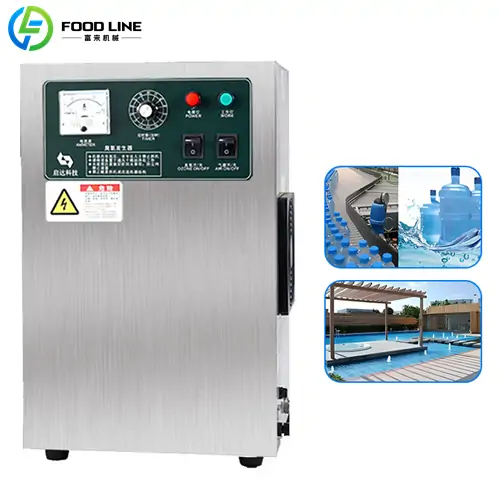
An industrial ozone generator is a powerful solution for water disinfection, air treatment, odor control, and oxidation. It produces ozone (O₃) on site, so there is no need to store large amounts of chemical disinfectants.
Our ozone machines are designed for stable ozone output, easy control, and long service life.
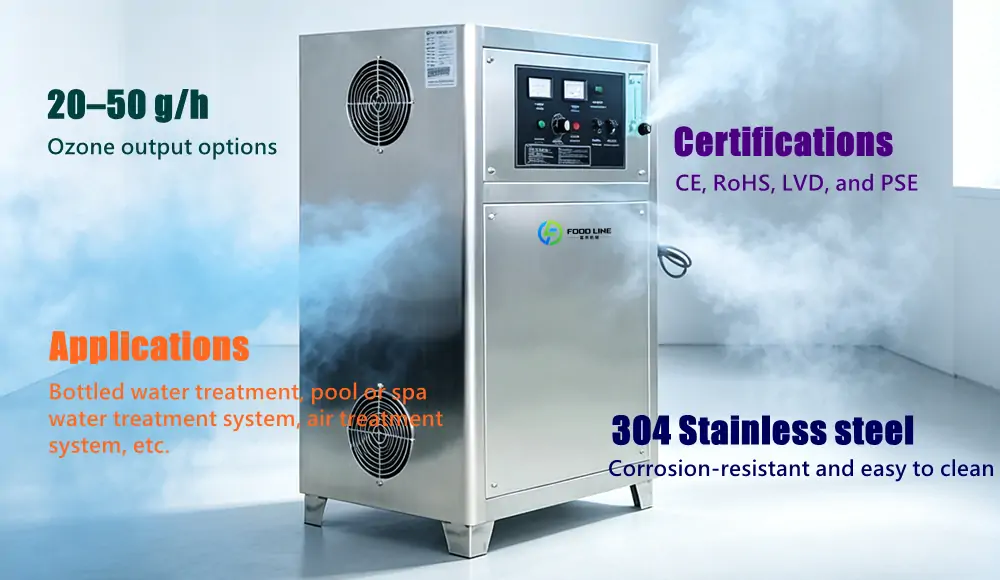
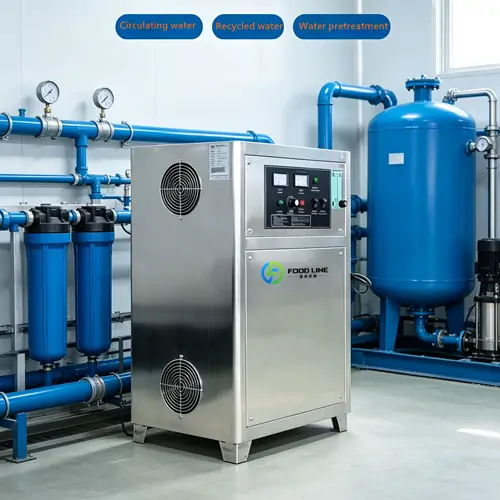
The generator uses corona discharge technology, a high-efficiency IGBT power module, and a durable quartz structure. Ozone output can be adjusted from 20% to 100%, giving operators better control over the treatment process.
Need help choosing the right ozone generator? Tell us your water flow, air volume, application, and required ozone output. Our engineers can recommend a suitable model and provide a quote.
An industrial ozone generator is a machine that produces ozone from oxygen. Ozone is a highly reactive form of oxygen. Because of its strong oxidation ability, it is widely used to treat water, air, and surfaces.
Depending on the project, an ozone generator can be used as:
The required ozone output depends on the water quality, water flow, contact time, air volume, target contaminants, and treatment goal. So, choosing a generator by output alone isn’t enough.
First, oxygen enters the ozone generation system. This can come from the surrounding air or an external oxygen source. External oxygen feeding is available as an option when higher ozone concentration or more controlled gas quality is required.
Inside the ozone generator, a high-voltage electrical field is created through the discharge system. The electrical energy breaks oxygen molecules into individual oxygen atoms.
These oxygen atoms then combine with other oxygen molecules to form ozone:
O₂ + electrical energy → 2O O + O₂ → O₃
The generated ozone is then sent to the treatment system. Depending on the project, it can be injected into water or mixed with air.
When ozone reacts with target substances, it oxidizes them. After treatment, unused ozone decomposes naturally into oxygen.
Why Corona Discharge?
Corona discharge is one of the most widely used methods for commercial and industrial ozone production.
It offers:
Stable ozone production
High electrical efficiency
Adjustable ozone output
Compact equipment design
Long operating life
Good suitability for continuous operation
Industrial Ozone Generator Structure
The machine is designed around several key components that work together to produce and control ozone safely.
1. High-Efficiency IGBT Power Module
The generator uses large power IGBT modules. They provide efficient power conversion and help support stable ozone production.
The design also helps reduce energy loss and supports long-term operation.
2. Quartz Ozone Generation Structure
The long-life quartz structure is an important part of the ozone generation system.
It is designed to withstand the electrical discharge process and provide stable ozone generation over extended periods.
3. Air Cooling System
The equipment uses air cooling to help control operating temperature.
Good heat management is important because excessive heat can reduce ozone production efficiency and affect component life.
4. 304 Stainless Steel Enclosure
The stainless steel enclosure provides a strong and durable housing for the equipment.
304 stainless steel is widely used in water treatment and food-related environments because of its corrosion resistance and easy cleaning.
5. Control System
The generator supports variable timing control and continuous ozone adjustment.
Operators can adjust the ozone output from 20% to 100% according to the treatment requirements.
Remote and Wi-Fi control are also available for convenient operation.
Key Features of Our Industrial Ozone Generator
20–50 g/h ozone output options
20–100% continuous ozone adjustment
Corona discharge technology
High-efficiency IGBT power modules
Long-life quartz structure
Air cooling
304 stainless steel enclosure
Multi-point fault detection
Over-voltage protection
Over-current protection
Over-temperature protection
Variable timing control
Remote control
Wi-Fi control
Optional external oxygen feeding
CE, RoHS, LVD, and PSE certifications
Ozone Generator Applications
An industrial ozone generator can be used in many industries. The correct model depends on the required ozone dose and treatment conditions.
1. Water Treatment
Ozone is widely used for water oxidation and disinfection.
An ozone generator for water treatment can be integrated into systems for:
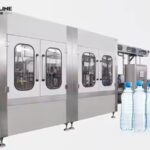
Bottled water plants
Drinking water treatment
Groundwater treatment
Process water treatment
Industrial water treatment
Reuse water treatment
Ozone can help oxidize certain organic compounds and other substances in water. It can also be used as part of a broader disinfection process.
2. Bottled Water Plants
Ozone is commonly used in bottled water production.
It can be integrated into water treatment systems before filling. It may also be used in certain bottle, cap, and equipment sanitation processes, depending on the plant design.
For bottled water projects, the ozone generator should be sized according to water flow, ozone demand, contact time, and the required ozone concentration.
3. Groundwater Treatment
Groundwater quality can vary from one location to another.
Ozone treatment can be used as an oxidation step in groundwater treatment systems. It can help address certain contaminants and improve water quality before further filtration or treatment.
A water analysis is recommended before selecting the ozone generator.
4. Spa Pools and Pools
Ozone can be used as part of a pool or spa water treatment system.
It can help reduce the treatment load on conventional disinfectants and support better water quality.
The actual ozone dose should be determined according to pool volume, water circulation rate, water temperature, and other treatment conditions.
5. Indoor Air Quality
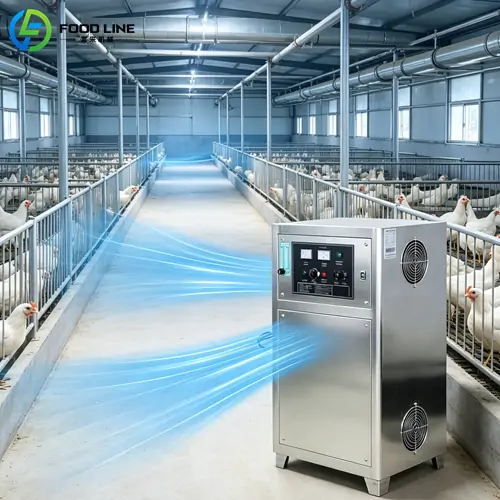
An ozone generator can also be used in air treatment systems for specific controlled applications.
Potential application areas include:
Office buildings
Schools
Commercial facilities
Industrial spaces
Odor treatment areas
Certain enclosed treatment spaces
However, ozone is not simply a replacement for a standard air purifier. Ozone can be harmful to people and animals at unsafe concentrations. Ozone-generating equipment should therefore be used only in applications where exposure can be properly controlled.
For occupied spaces, a conventional filtration or non-ozone air purification system may be more appropriate.
Ozone Generator vs. Traditional Chemical Treatment
One reason industrial users consider ozone is its strong oxidation ability and on-site production.
Ozone Treatment
Traditional Chemical Treatment
Produced on site
Usually stored and transported
No need for large chemical storage
Requires chemical storage
Ozone decomposes into oxygen
Some chemicals may leave residues
Fast oxidation
Treatment speed depends on chemical
Output can be adjusted
Chemical dosing must be controlled
Suitable for water and air treatment
Application depends on chemical type
Ozone is not suitable for every project. The best treatment method depends on the water or air quality, target contaminants, required treatment level, operating cost, and local regulations.
Industrial Ozone Generator Safety
Ozone is a strong oxidizing gas and must be handled correctly.
An ozone generator should be installed and operated in a properly designed treatment system. Ozone should not be released into occupied areas at unsafe concentrations.
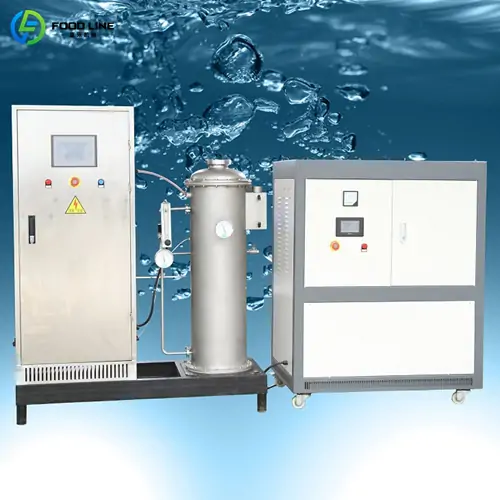
For water treatment systems, ozone contact tanks and off-gas treatment equipment may be required. For air treatment, the application must be designed to prevent unsafe human exposure.
The machine’s built-in protection system helps protect the equipment from electrical and temperature-related faults. However, equipment protection is not the same as operator exposure protection. The complete ozone treatment system should include appropriate safety controls based on the application.
How Much Does an Industrial Ozone Generator Cost?
The price of an industrial ozone generator depends on many factors, such as ozone production capacity, Air-fed or oxygen-fed configuration, Control system, Cooling system, Material and enclosure, Accessories, etc.
For this reason, it is difficult to give one fixed price for every project. For your reference, a 30g/h commercial ozone generator costs 1500 – 3000 usd.
Contact us with your required ozone output and application. We can recommend the right configuration and send you a detailed quotation.
Trending Application: Ozone for Better Water Treatment
As water quality requirements become stricter, treatment plants are looking for efficient oxidation and disinfection methods.
Ozone is attracting attention because it can be generated on site and used as part of a multi-stage treatment process.
A modern ozone water treatment system may include:
Raw Water → Pre-Treatment → Ozone Generation → Ozone Injection → Contact Tank → Filtration → Final Treatment
The exact process depends on the water source and target contaminants.
For a commercial or industrial project, ozone should be considered as part of the complete treatment system rather than as a standalone machine.
Frequently Asked Questions
How much ozone does the machine produce?
Our standard ozone generators produce 20 g/h, 30 g/h, or 50 g/h. The ozone output can be continuously adjusted from 20% to 100%.
Can the ozone generator treat water?
Yes. The machine can be used as an ozone generator for water treatment. The final system should be designed according to water flow, water quality, ozone demand, and contact time.
Can I use an ozone generator as an air purifier?
Ozone can be used for specific controlled air treatment applications. However, ozone is not suitable for unrestricted use around people because excessive ozone exposure can be harmful. For occupied buildings such as offices and schools, the complete system must be designed with proper safety controls and exposure limits in mind.
Does the ozone generator need oxygen?
External oxygen feeding is available as an option. The suitable gas source depends on the required ozone concentration and application.
Get a Quote for an Industrial Ozone Generator
Choosing the right ozone generator starts with understanding your treatment requirements.
Send us the following information:
Application: water treatment, bottled water, groundwater, spa pool, air treatment, etc.
Required ozone output: if known.
Water flow or air volume: if applicable.
Water quality or treatment target: if available.
Power supply: voltage and frequency.
Preferred control method: standard, remote, or Wi-Fi.
Quantity: number of ozone generators required.
Our team can then recommend a suitable industrial ozone generator and provide a competitive quotation.