You are currently viewing What Is a Corn Tortilla Production Line & How It Works?
corn tortilla production line

What Is a Corn Tortilla Production Line & How It Works?

  • Post author:
  • Post category:Blog
  • Post comments:0 Comments

The corn tortilla production line is a complete set of food-processing machines designed to turn corn (or corn flour/masa harina) into uniform, high-quality corn tortillas on a continuous, automated basis. This production line is widely used by tortilla factories, commercial kitchens, and food manufacturers supplying supermarkets, restaurants, and foodservice brands.

Below is a clear, easy-to-understand breakdown of what a corn tortilla production line is and how it works.

What Is a Corn Tortilla Production Line?

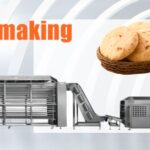
A corn tortilla production line is an integrated system of machines that performs every step of tortilla making—from dough preparation to baking and cooling—without manual handling.

Depending on capacity, it can produce:

  • Hundreds to thousands of tortillas per hour
  • Consistent size, thickness, and texture
  • Fresh or packaged tortillas for local or export markets

These lines can be semi-automatic or fully automatic, depending on production scale.

Main Components of a Corn Tortilla Production Line

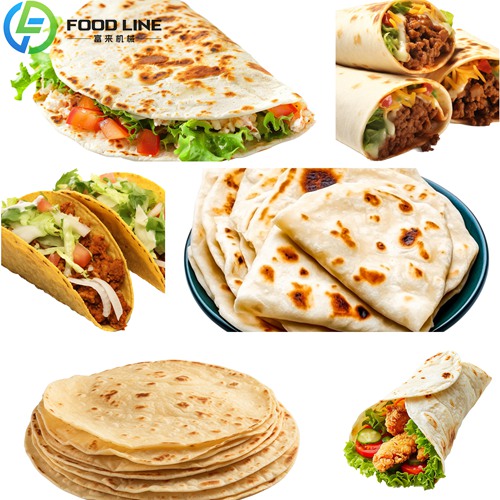
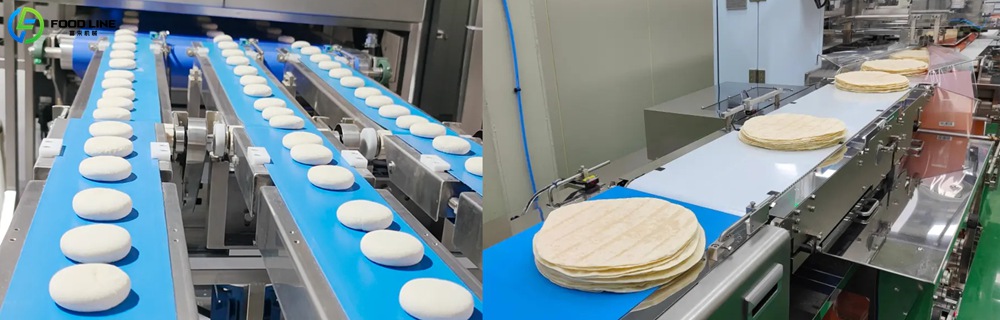
Corn And Wheat Flour Tortillas

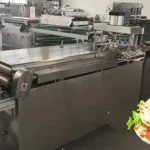
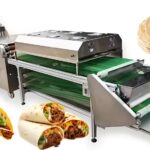
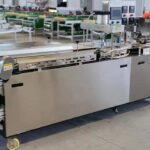
A standard corn tortilla line usually includes:

  1. Dough mixer
  2. Dough feeding & portioning system
  3. Tortilla forming (pressing or sheeting) machine
  4. Baking oven (multi-layer or tunnel type)
  5. Cooling conveyor
  6. Optional: counting, stacking, and packaging system

How a Corn Tortilla Production Line Works (Step by Step)

Step 1: Dough Preparation (Mixing)

Corn flour (masa harina), water, and optional ingredients (salt, preservatives) are added to a dough mixer.

Purpose:

  • Achieve smooth, elastic masa dough
  • Ensure even hydration and consistent texture

The mixer kneads the dough until it reaches the ideal consistency for forming.

Step 2: Dough Feeding & Portioning

The prepared dough is transferred to a feeding hopper or screw conveyor.

What happens here:

  • Dough is evenly fed into the forming machine
  • Portions are controlled for consistent tortilla weight and thickness

Step 3: Tortilla Forming

The dough is shaped into tortillas using one of two methods:

  • Pressing method: Dough balls are pressed flat between heated plates
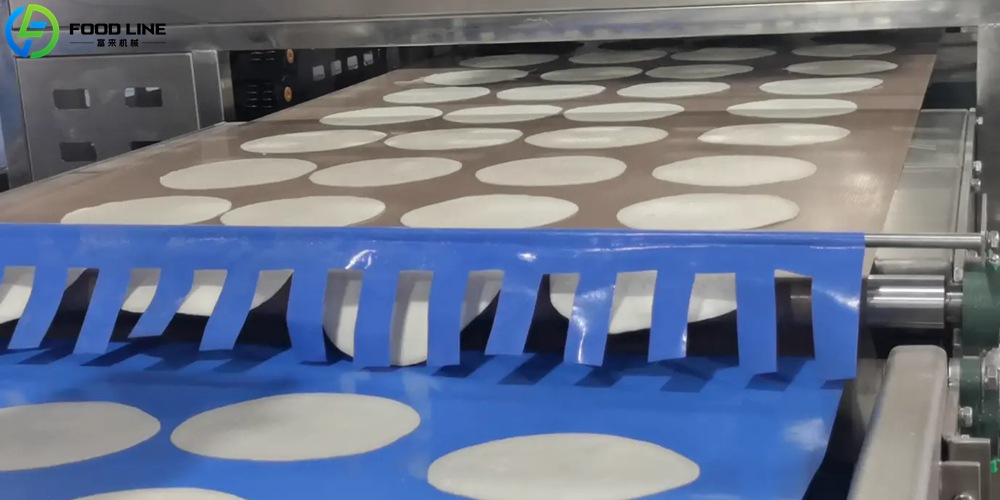
  • Sheeting & cutting method: Dough is rolled into a sheet and cut into round shapes

Result:

  • Perfectly round tortillas
  • Uniform diameter and thickness

Step 4: Baking (Cooking)

Formed tortillas move into a tortilla baking oven, typically a multi-layer or tunnel oven.

Inside the oven:

  • Tortillas are baked on both sides
  • Temperature and time are precisely controlled
  • Characteristic puffing may occur, improving texture

Step 5: Cooling

After baking, tortillas pass through a cooling conveyor.

Why cooling matters:

  • Prevents condensation
  • Maintains freshness
  • Prepares tortillas for stacking or packaging

Step 6 (Optional): Stacking & Packaging

For commercial production, the line may include:

  • Automatic counting and stacking
  • Plastic bag or vacuum packaging
  • Date coding and sealing

Advantages of Using a Corn Tortilla Production Line

  • High efficiency – continuous production with low labor costs
  • Consistent quality – uniform size, weight, and taste
  • Food safety – reduced human contact
  • Scalability – suitable for small factories to large industrial plants
  • Customizable output – tortilla size, thickness, and capacity can be adjusted

Where to buy the automatic flour tortilla making machine?

Do you want to invest a corn tortilla production line? Contact Henan Foodline Machinery. WhatsApp +8613598866720. With more than 20 years of experience, our torilla maker machines are raised by many food manufacturers.
Leave a Reply